
Professional practice · Sinop, Brazil
Raízes Building, Sinop
Technical control and quality management of the concrete, from the piles to the frame.
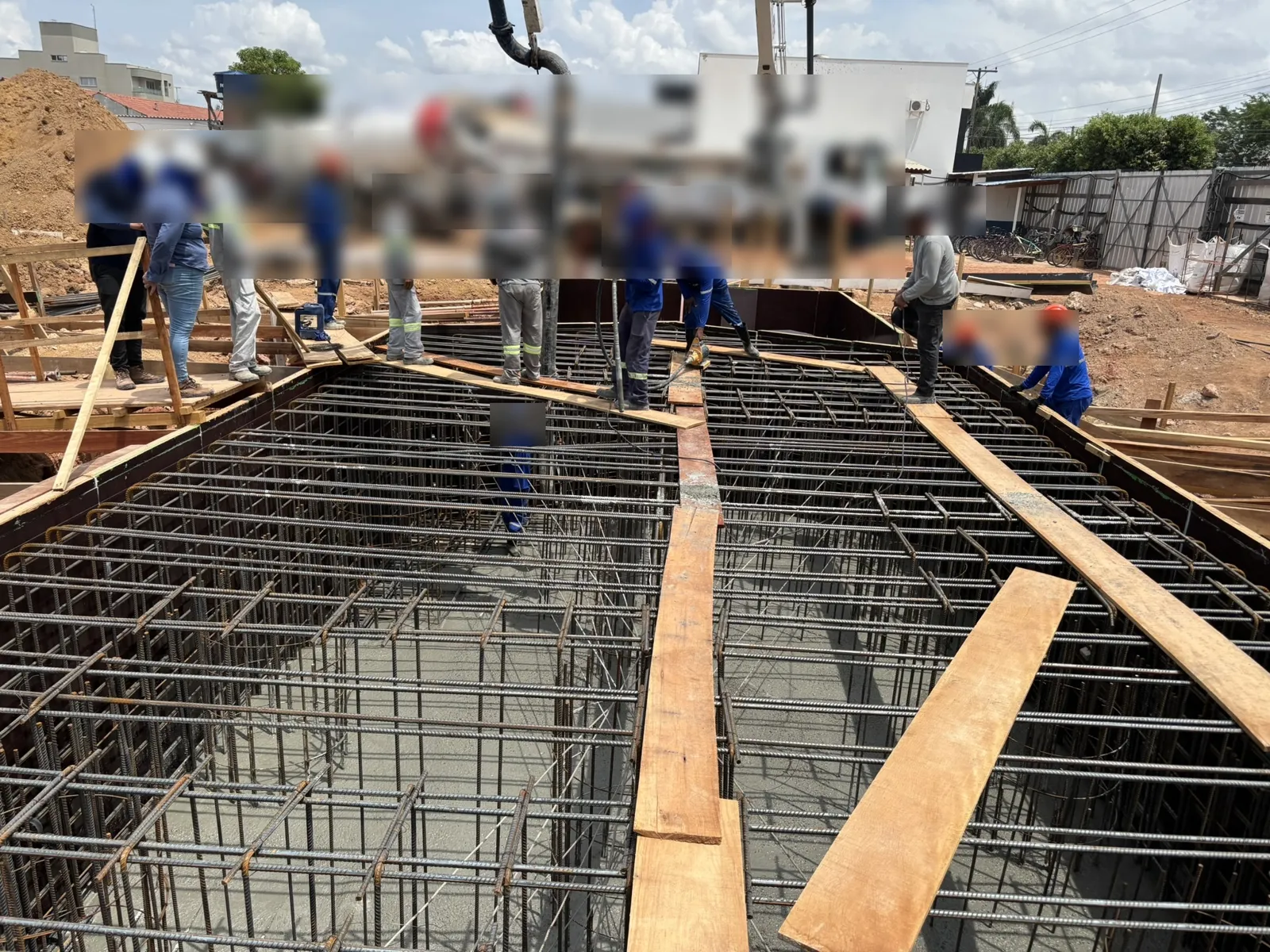
Summary. At the Raízes Building, a Construtora São Benedito project in central Sinop, Mato Grosso, Concreto.tec.br has run inspection and quality management of the concrete since the job started. A resident inspector is on site full time and supervises the acceptance and casting crew, which belongs to the project and was trained by us. When needed, she also watches batching at the plant. Each load is traced to the member it was placed in, and each lot is judged under ABNT NBR 12655, the Brazilian standard for proportioning, control, reception and acceptance of concrete. In role it sits where parts of ACI 301 and EN 206 sit elsewhere; the numerical criteria are not the same and are not interchangeable.
The project
The Raízes Building, by Construtora São Benedito, is a high-end residential tower of 42 stories, about 153 m tall, with 132 apartments, in the commercial district of Sinop. The press presents it as the tallest tower in northern Mato Grosso, with about 15,000 m³ of concrete planned (Exame; ISTOÉ Dinheiro, 2025).
For a concrete technologist that means a large, continuous stream of placements, several strength classes, and critical members: deep piles, pile caps and a large mat. Control has to be systematic, traceable and daily.
A 50-metre foundation
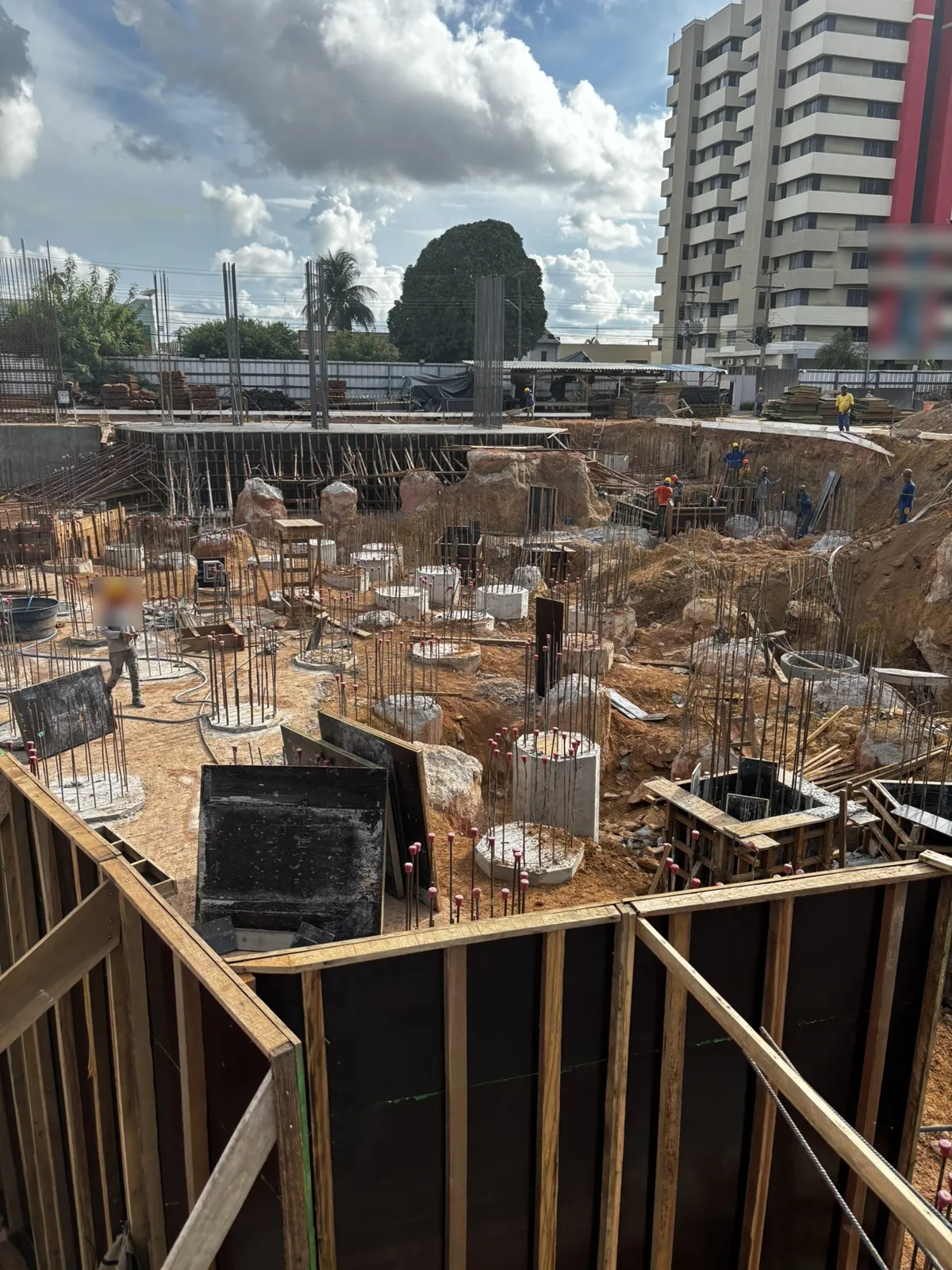
The tower is founded on bored piles cast under stabilizing fluid, up to 50 m deep and 80 to 100 cm in diameter. The contractor reports 197 piles under the tower footprint alone, and a single pile can take about 47 m³ of concrete, close to six truckloads (Construtora São Benedito, 2025; Téchne magazine, as cited by Gadani Imóveis, 2025). Exame compared that depth with the 40 m foundation of Senna Tower in Balneário Camboriú, and ND+ (2026) called Raízes the holder of “Brazil’s largest building foundation”. That title is a press claim, not an official record.
For concrete control, the scale of the risk changes. A pile like this is placed submerged, from the bottom up, with no vibration and no way to look at it once it is done. The pile concrete was therefore specified as class C40 (fck 40 MPa), slump flow 750 mm: the flow is what lets it fill the borehole and wrap the reinforcement on its own, and the strength is what the structure will demand 50 m down. Checking the slump flow of every truck before discharge, and tying each load to the pile it went into, is what makes it possible to say, from data, what is inside each pile.
Scope of the work
- Period: from the start of construction (February 2025) to date, on every stage built so far.
- Concrete classes: foundation piles in C40, slump flow 750 mm. Other members use the classes in the structural design.
Resident inspector. An inspector from Concreto.tec.br is on the job full time. She supervises each placement, checks the paperwork on each load and is the technical reference for the field crew.
A trained acceptance crew. Acceptance and casting are done by six people from the project itself, trained by us in sampling, consistency testing, casting, identification and initial curing of specimens. The job gains operational autonomy; the technical control stays independent.
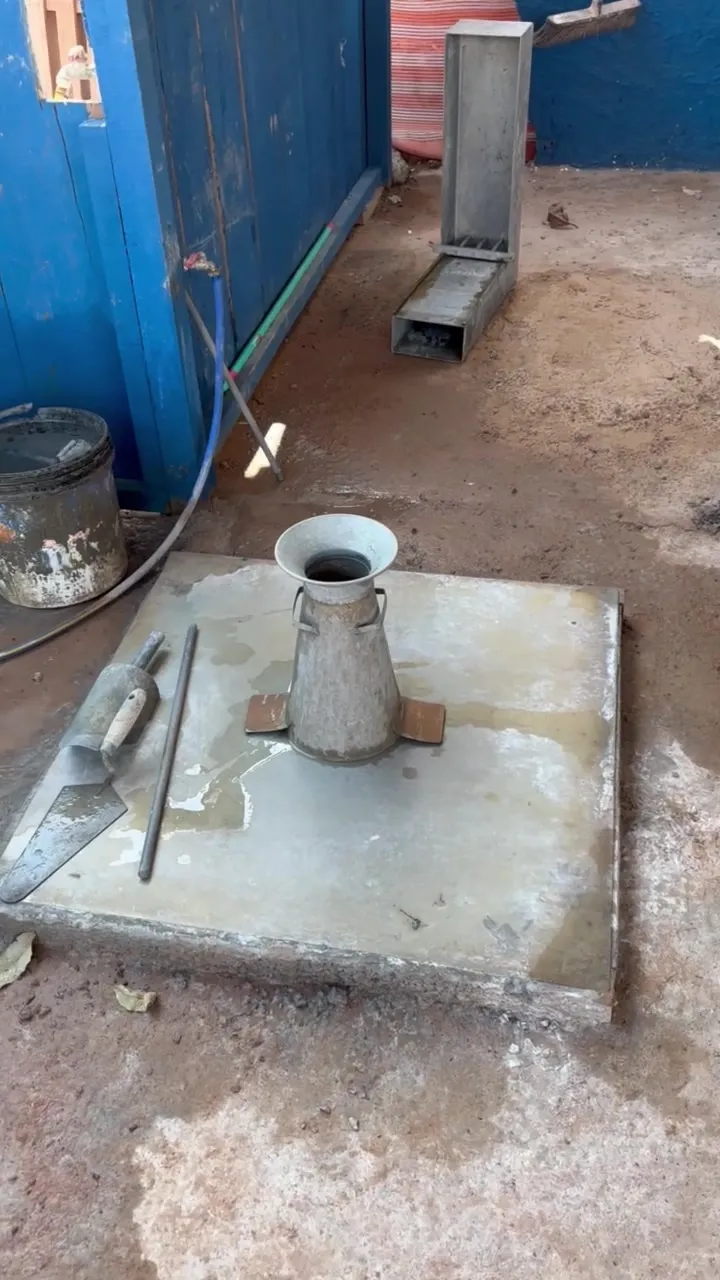
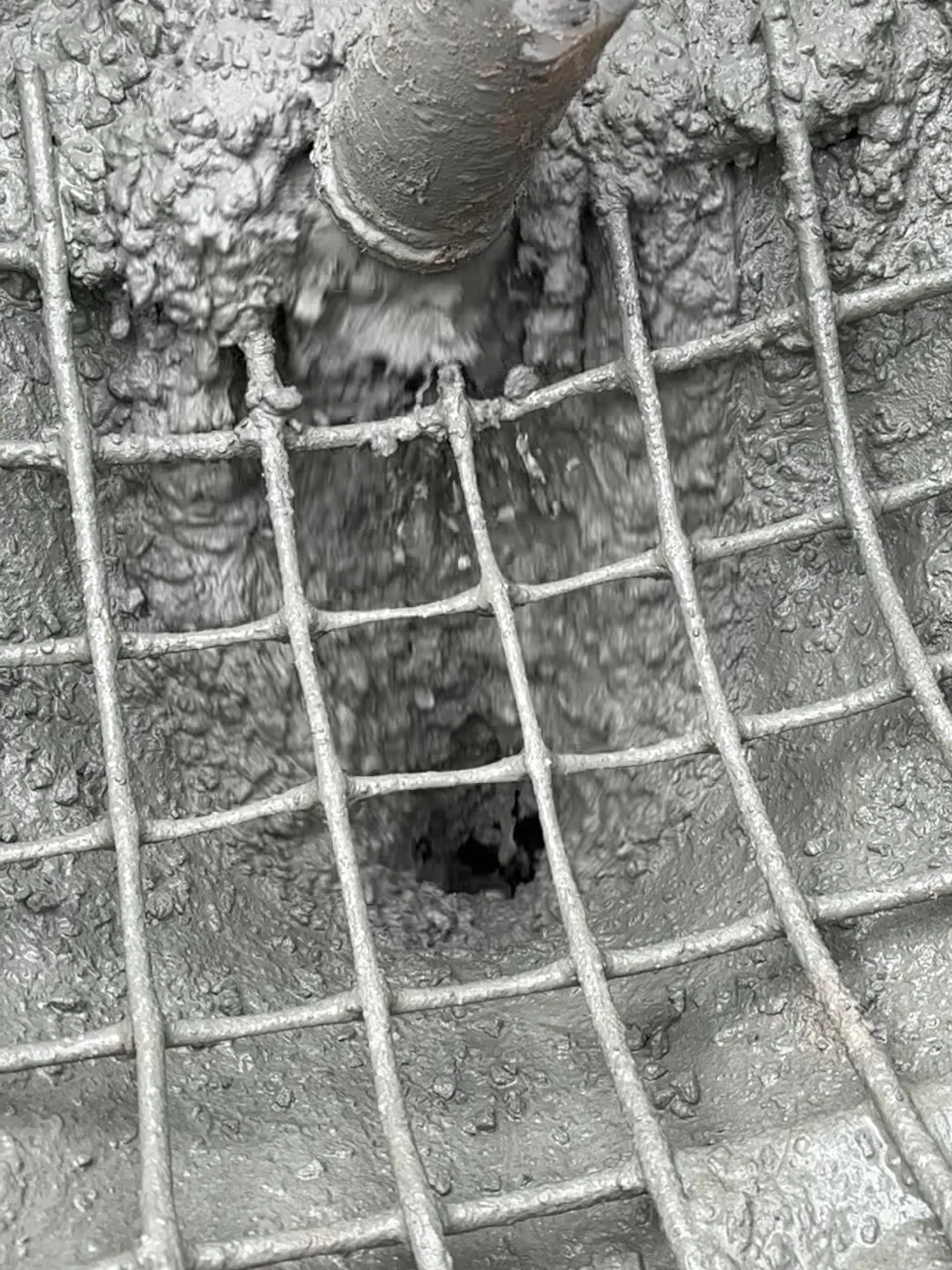
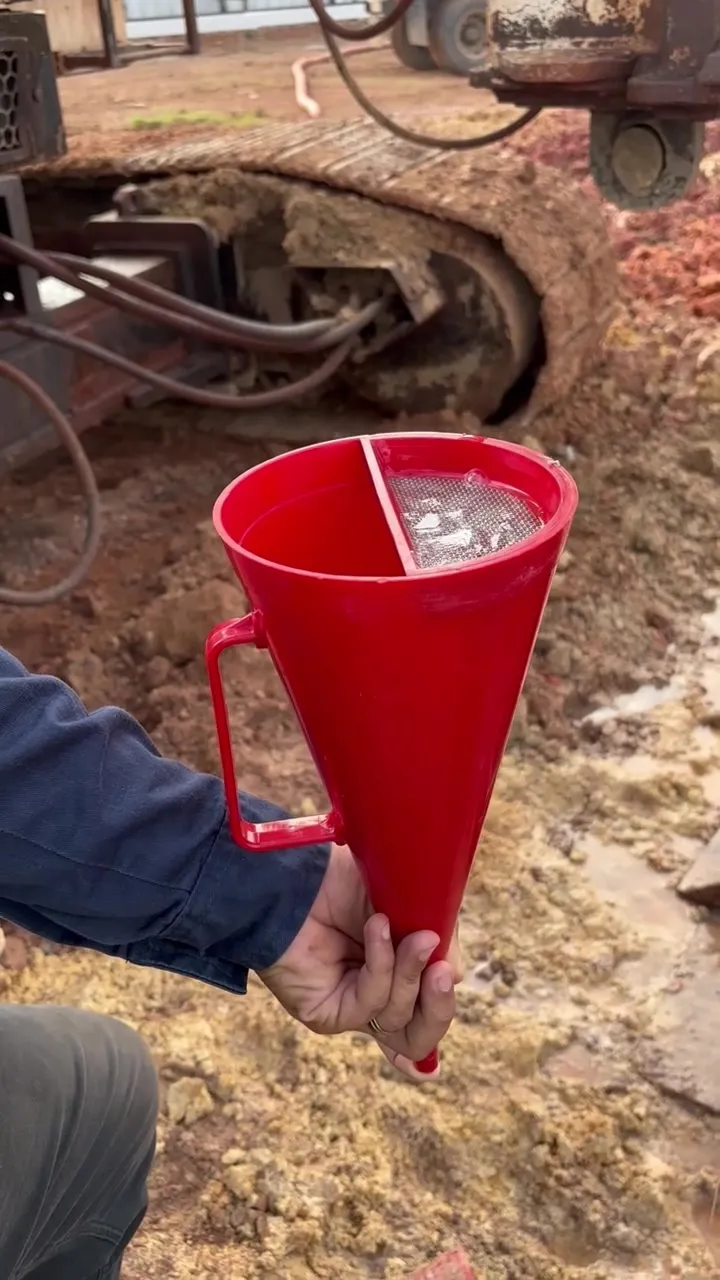
Acceptance. For each truck we check the delivery ticket against the concrete that was ordered, and the time from batching to placing. Only then is discharge released.
Consistency (ABNT NBR 16889). Consistency is measured at acceptance and compared with the specified tolerance. A result outside the range stops discharge until a technical decision is written down. NBR 16889:2020 is the slump test; in role it matches ASTM C143 and EN 12350-2. The tolerance numbers are not interchangeable. The 750 mm figure on the piles is a slump flow, not a conventional slump.
Casting specimens (ABNT NBR 5738). Specimens are cast with the sampling and compaction the standard requires. Each one is identified by load, member and date, and stays in protected initial curing until it goes to the laboratory. NBR 5738 sets that procedure; ASTM C31 and EN 12390-2 cover the same act, with their own details.
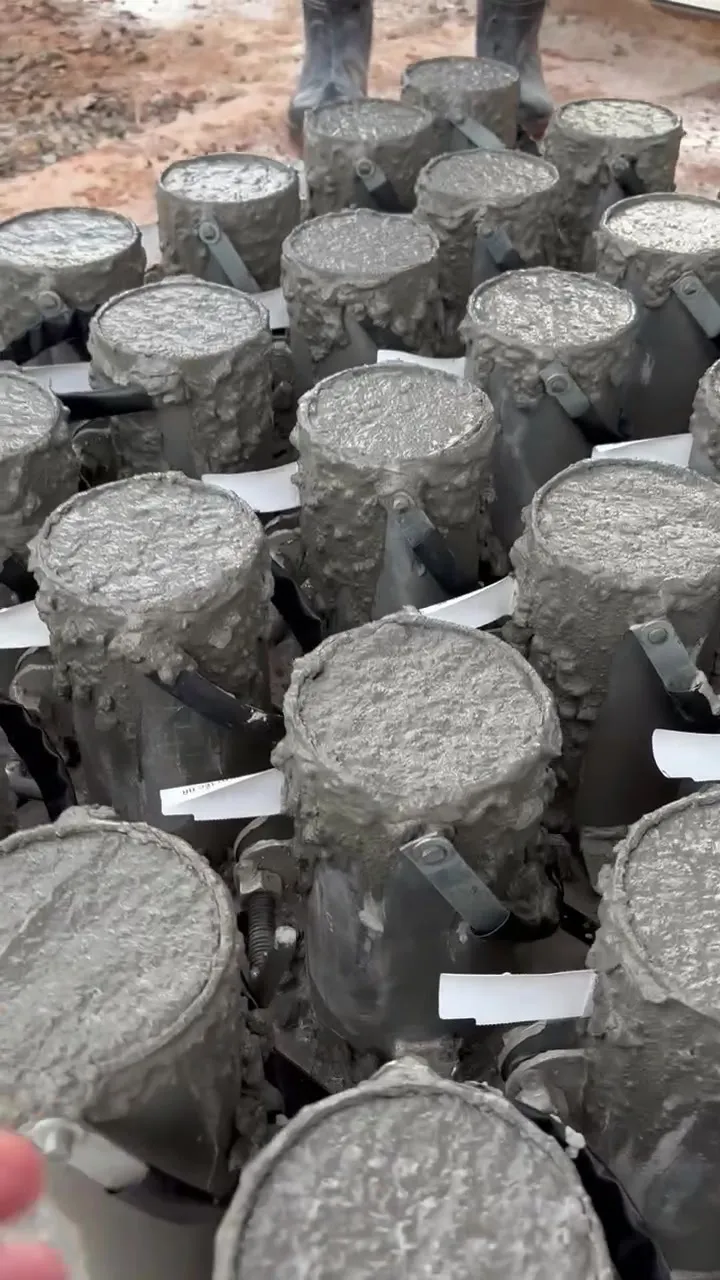
Compressive strength test (ABNT NBR 5739). Specimens are tested, as a rule, at 7 and 28 days, with reserve cylinders at 63 days. Exceptionally we also test at 3 days. NBR 5739 is the compressive strength test on cylindrical specimens. ASTM C39 and EN 12390-3 measure the same kind of result; specimen geometry and capping are not copied from one standard to another.
Acceptance (ABNT NBR 12655). Control is by sampling under NBR 12655. Lots are judged by the estimated characteristic strength against the specified fck, and each lot has a documented decision.
At the batch plant. When needed, the inspector watches batching at the plant.
How quality is managed
Traceability from load to member. Each truck is tied to its delivery ticket, the measured consistency, the specimens cast from it, and the member (pile, cap, column, slab) the concrete went into. If a result comes in low, we know exactly where that concrete is.
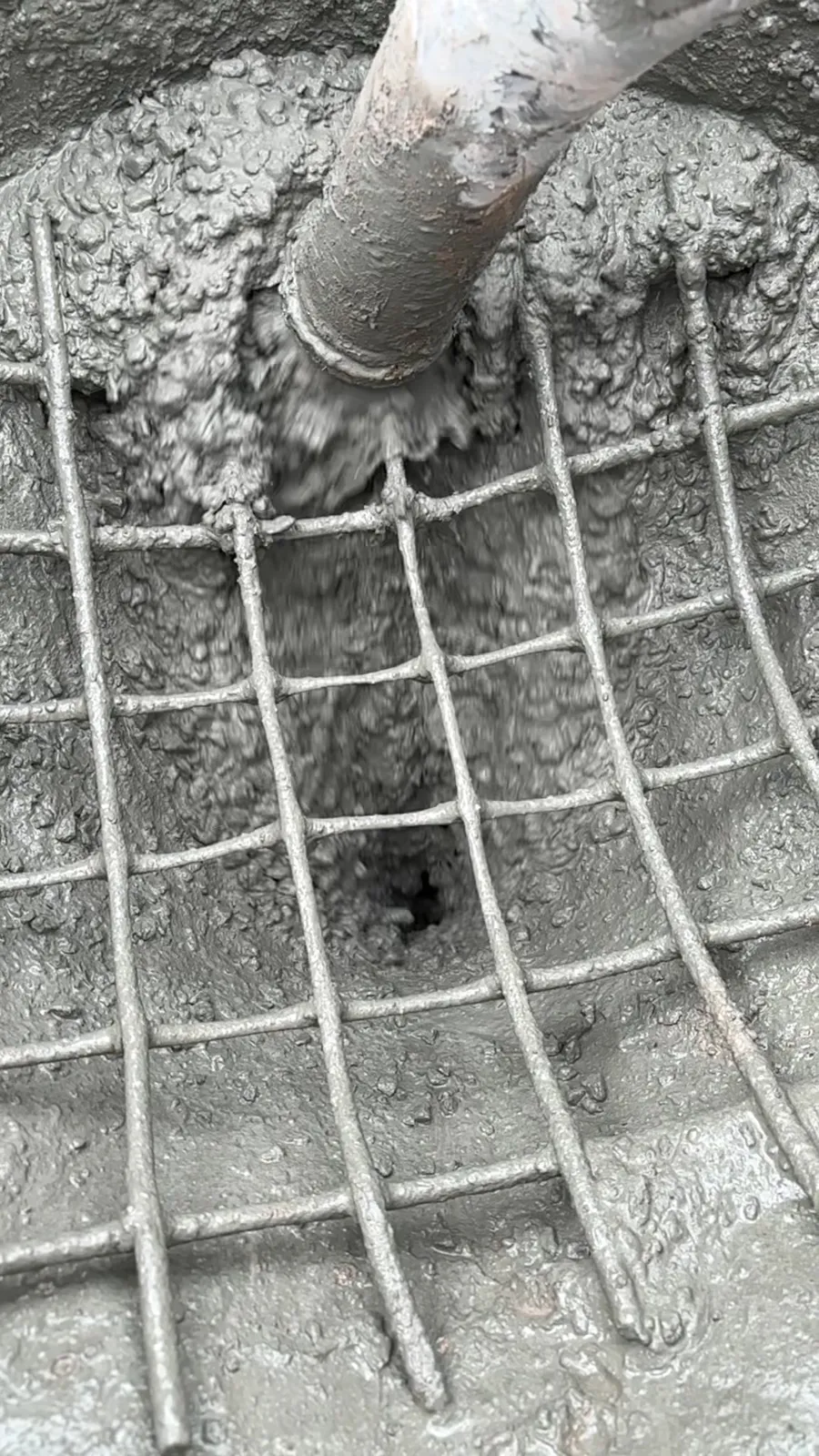
Nonconformities. Departures in consistency, time, paperwork or strength are recorded with the likely cause, the immediate action and the technical disposition.
Reports. Acceptance and strength results are consolidated in reports to the contractor, with the traceability of each lot.
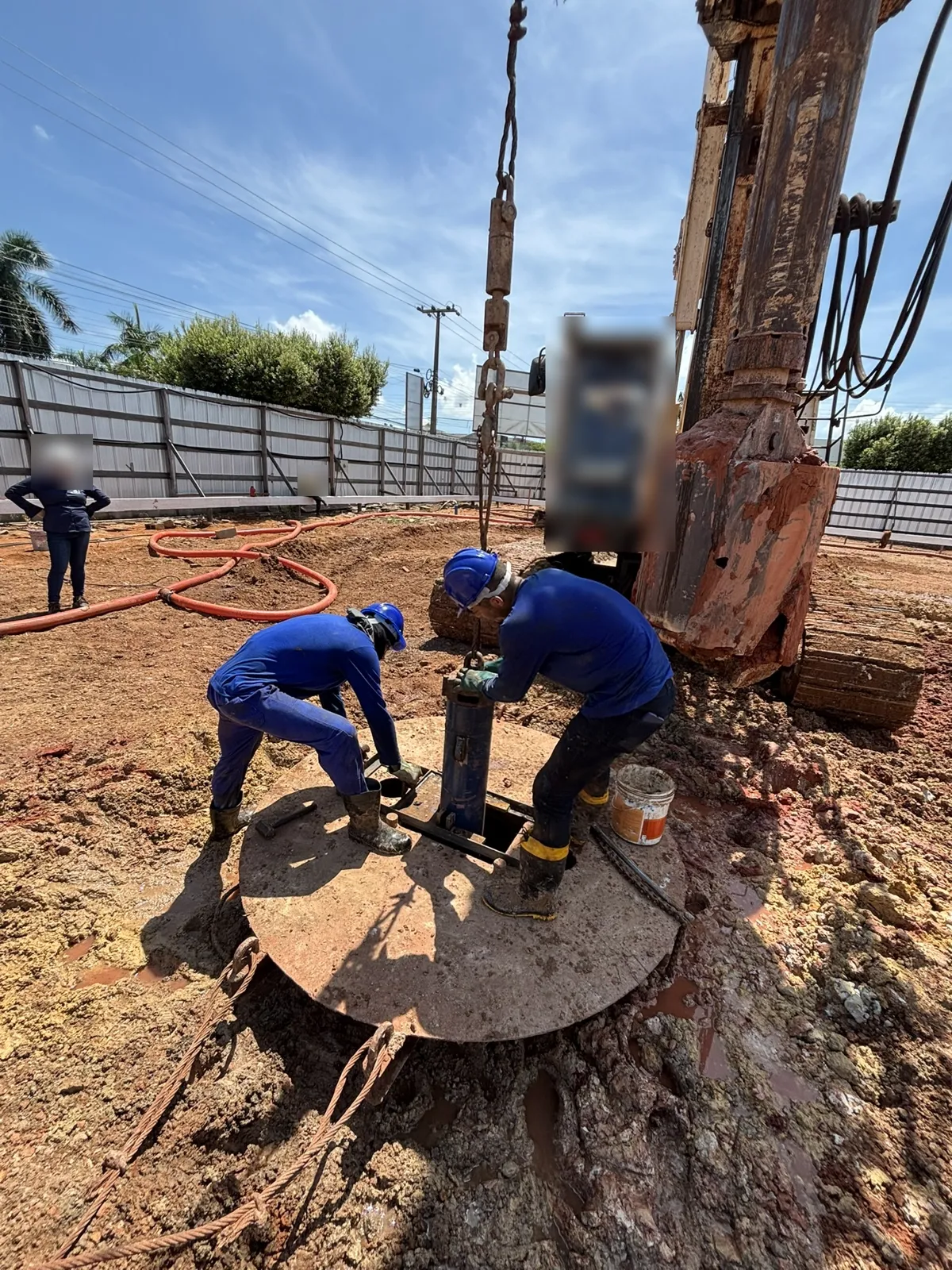
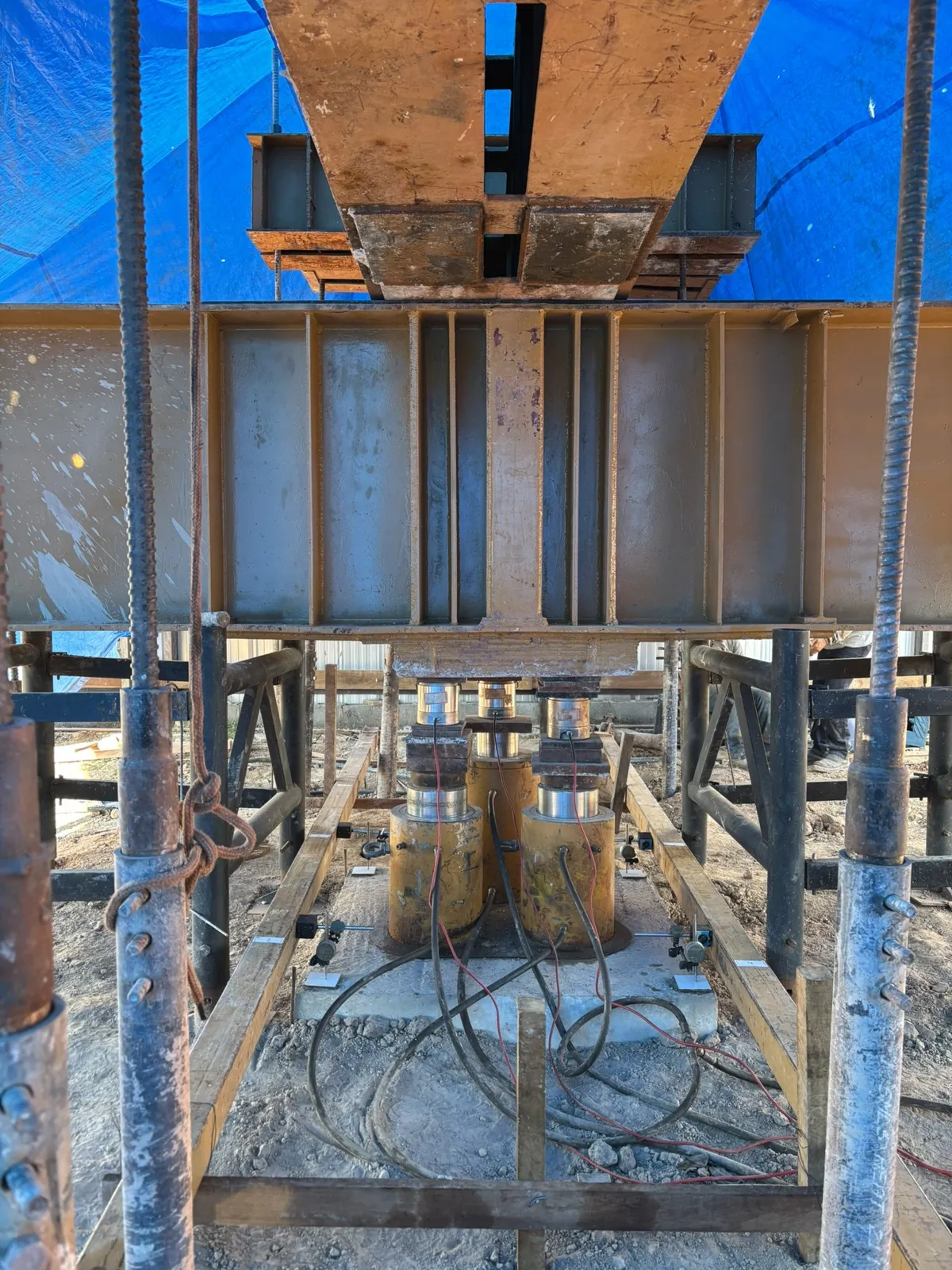
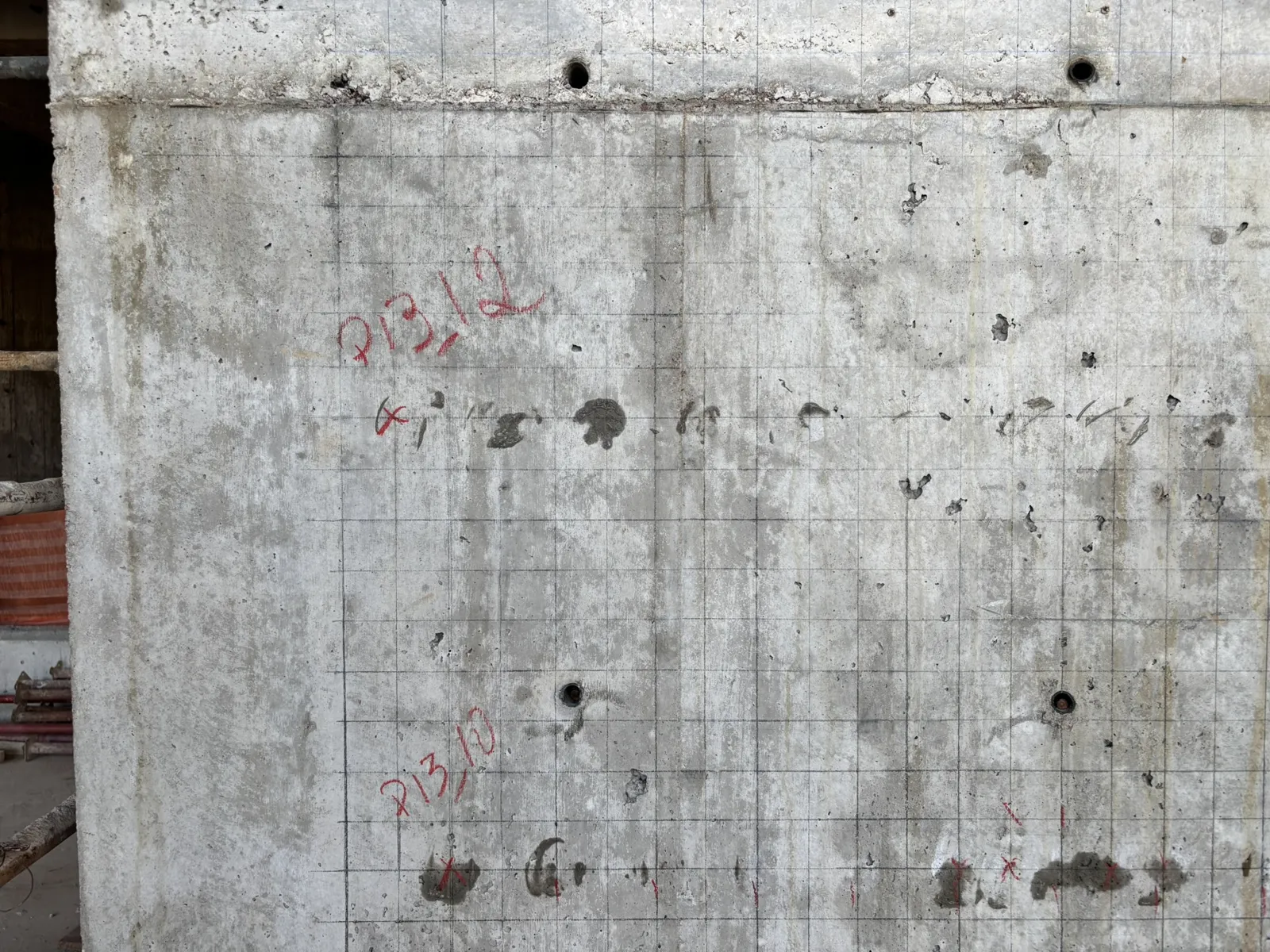
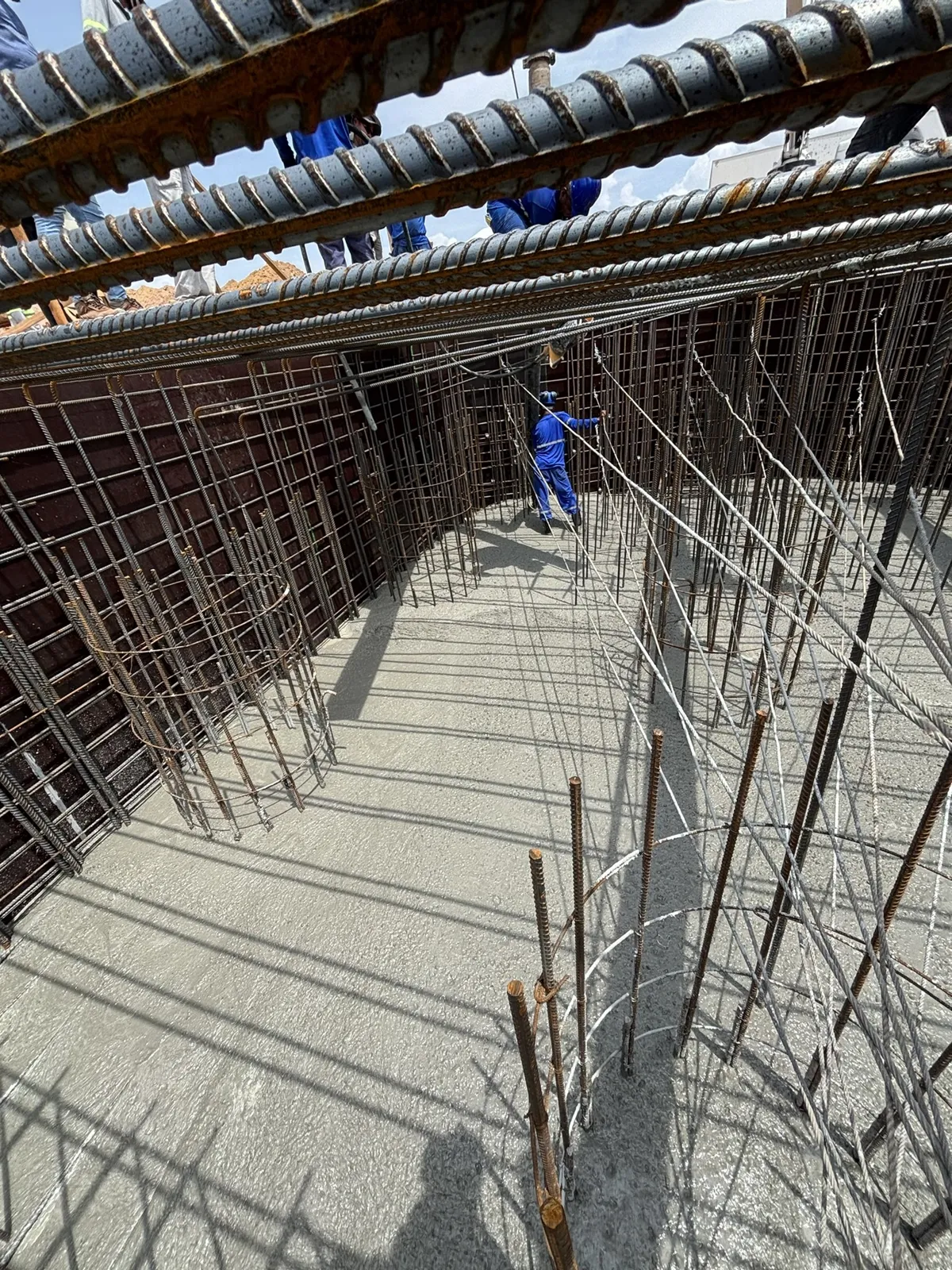
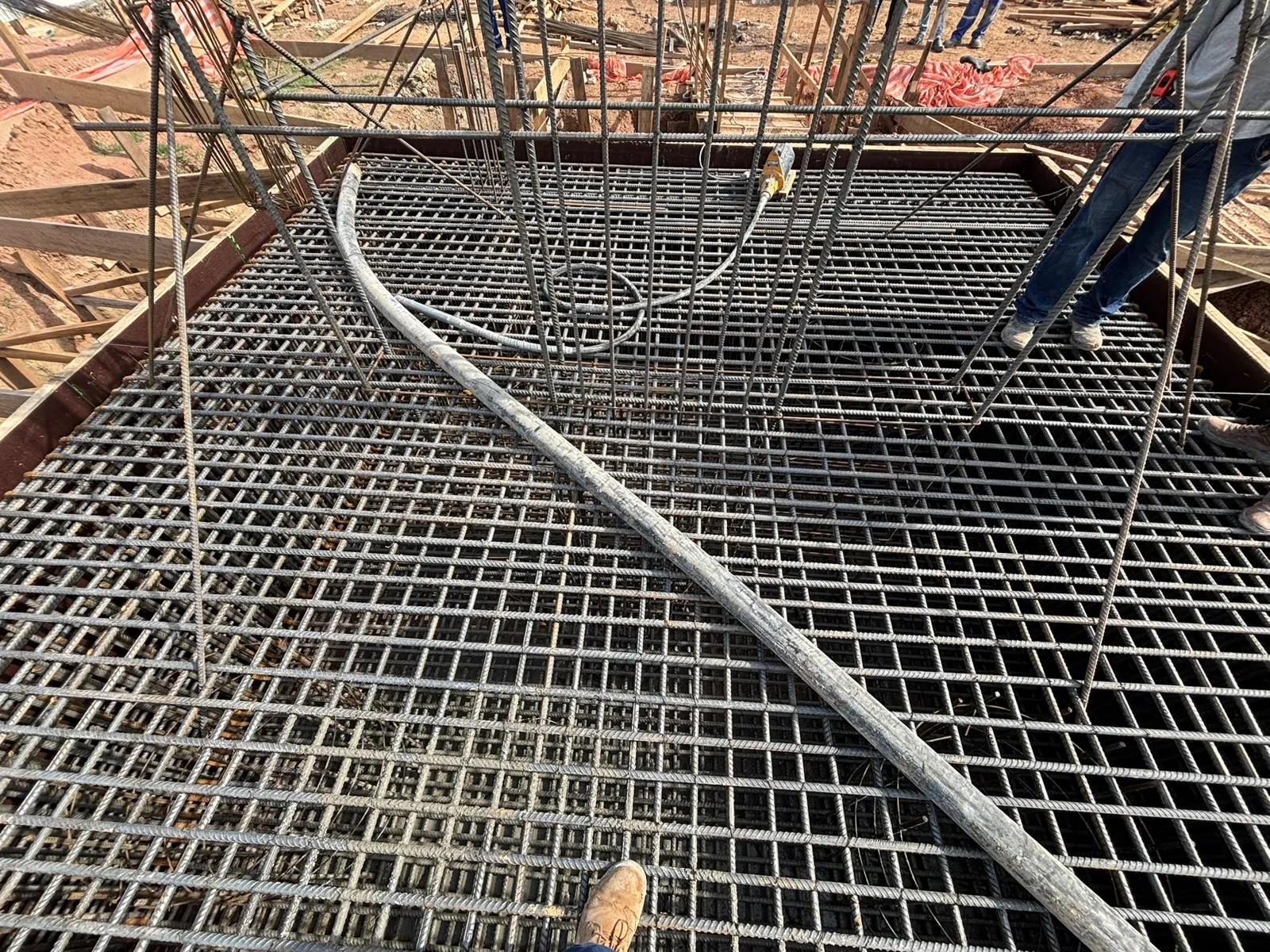
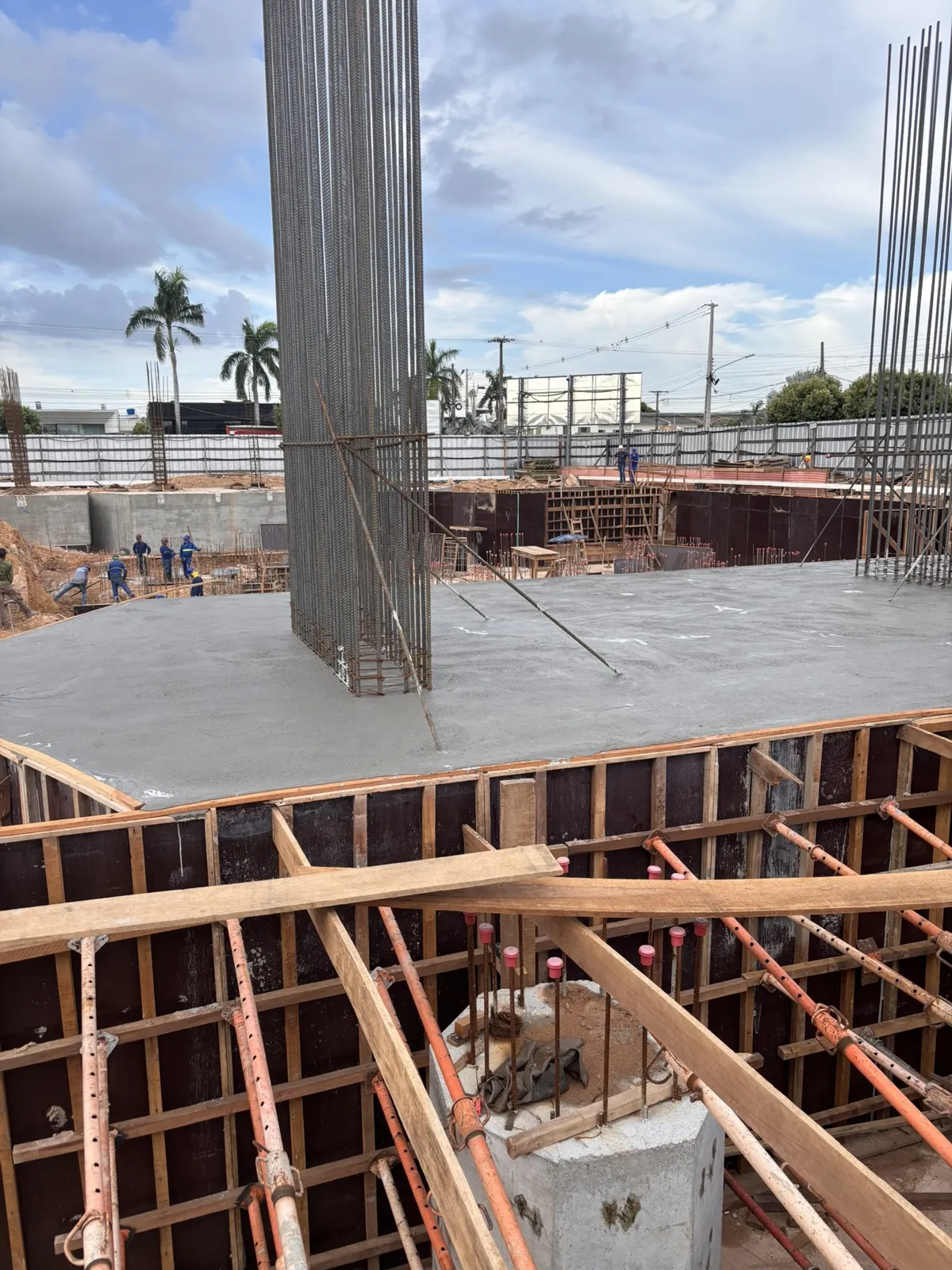
Witnessing of further evaluations. Concreto.tec.br witnessed the static pile load test and the inspection of concrete members shown below. Those evaluations were carried out by others.
Gallery
Sources for the public figures on the project
- Construtora São Benedito — Raízes SB project page and blog, 5 Feb 2025.
- ISTOÉ Dinheiro, 17 Aug 2025 — “Gigante do Nortão” (Sinop’s first 42-story building).
- Exame — “Prédio mais alto de Sinop terá fundação maior que a do Senna Tower, em BC” (Sinop’s tallest building, and a foundation deeper than Senna Tower’s).
- ND+, 22 Jul 2026 — a claimed record for Brazil’s largest building foundation.
- Gadani Imóveis, 11 Apr 2025 — the Raízes foundation in Téchne magazine.
Contact
Need this level of control on a project?
Reach Concreto.tec.br by email or WhatsApp.
Talk to Concreto.tec.br